Roux-En-Y Gastric Bypass Surgery
In gastric bypass surgery, your stomach and your small intestines are re-routed. First, the upper part of your stomach is divided to create a small pouch. The food will go into the smaller stomach and bypass the larger part of your stomach. Subsequently, the bowel is divided and a Y-connection is created to allow food to mix with your pancreatic juices and bile. As a result, gastric bypass surgery falls under a category of weight loss surgery called malabsorptive. You will absorb less calories and nutrients from the food you eat, meaning taking vitamins will be a normal requirement for the rest of your life.
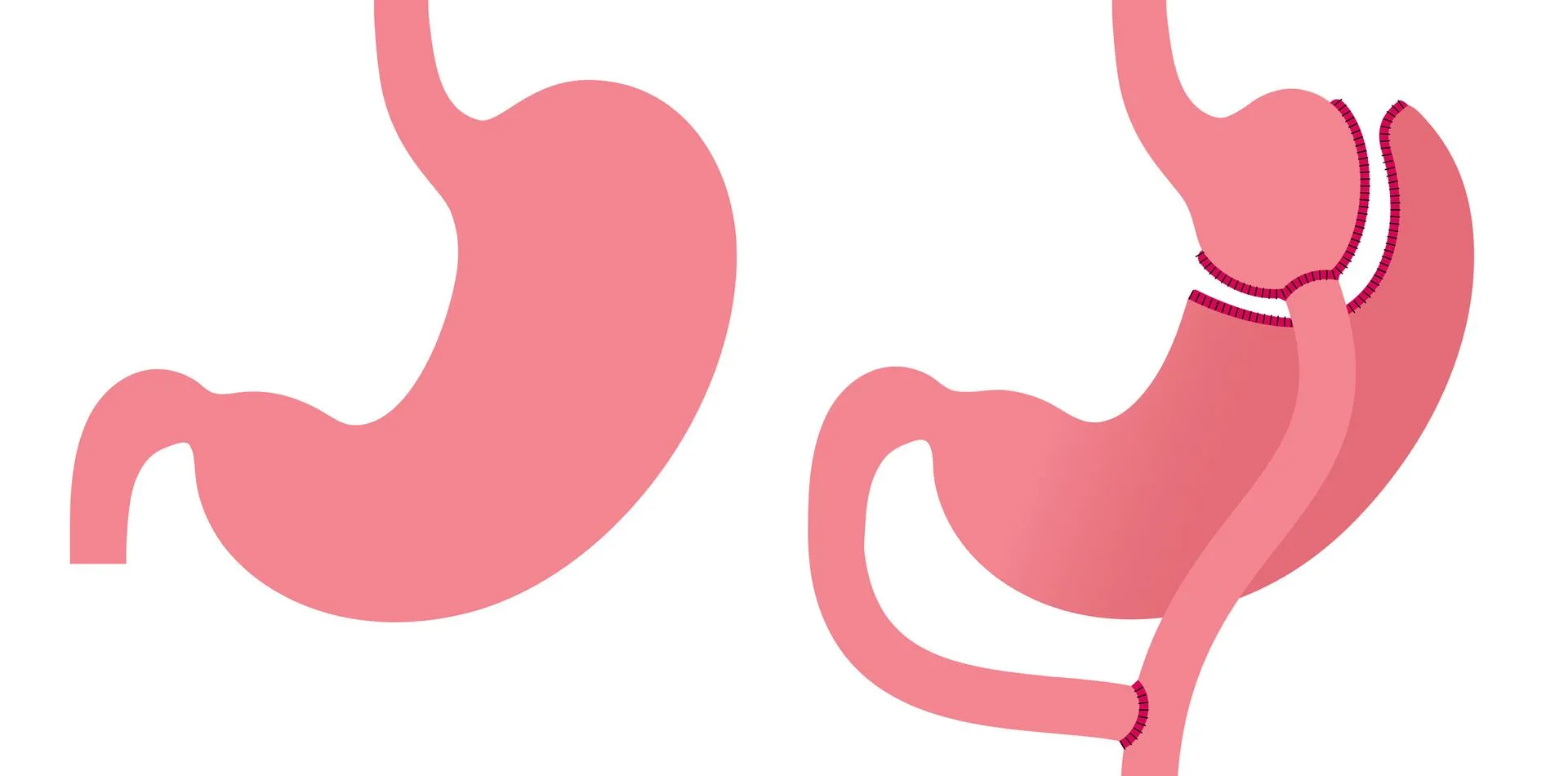
How gastric bypass surgery works
Roux-en-Y gastric bypass surgery works in two main ways to promote weight loss:
First, it creates a very small pouch from the upper part of the larger stomach. This pouch becomes your "new" stomach. Because it is considerably smaller, you will feel full after eating just a small amount of food. This restricts your calorie intake and for a longer period of time, decreasing your overall consumption of calories.
Next, the small intestine is divided and re-routed. The food will bypass the lower part of the stomach and the first part of the small intestine. This will prevent food from mixing with enzymes right away. As a result, you will absorb fewer calories and nutrients from your food.
Benefits of Roux-en Y Gastric Bypass Surgery
Gastric bypass surgery offers several major benefits, including:
- The surgery has a long track record of success since it is one of the oldest weight loss procedures.
- It can be performed using minimally invasive techniques, which means faster healing and less discomfort.
- Better initial potential for more weight loss compared to some other approaches.
- There is no adjustment after surgery.
Gastric bypass surgery can also reduce or treat other obesity-related health conditions, including:
- High blood pressure
- Gastroesophageal reflux disease (GERD)
- Sleep apnea
- Heart disease
- Type 2 diabetes
- Joint pain
Risks of Gastric Bypass Surgery
Gastric bypass surgery will alter your digestive anatomy, which is permanent and irreversible in most cases. Additionally, it will require a lifetime of monitoring and supplementation of vitamins. As with any major procedure, there is a risk of complications such as bleeding, infection, or gallstones. Another potential side effect of gastric bypass surgery is dumping syndrome, which happens when food moves too rapidly from your stomach into your small intestine. Symptoms of dumping syndrome include:
- Increased heart rate
- Sweating
- Nausea
- Diarrhea
- Vomiting
To avoid dumping syndrome, you should avoid eating foods that are high in sugar, fat, or carbohydrates.
Dr. Baptista's Bariatric Center is recognized as a leading weight loss surgery center, offering world-class care and surgical outcomes in a safe, friendly, and compassionate environment.